Rockets and scale
Rockets and scale
These ships are deliberately large. Plan the launch site around the complete silhouette, including boosters and upper fins.
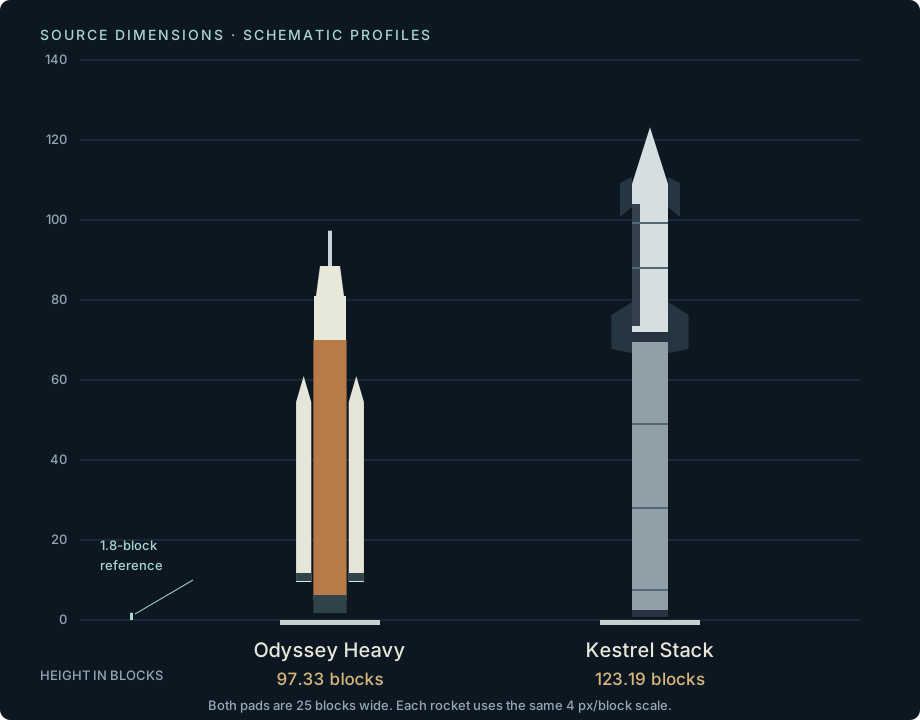
| Rocket | Height | Maximum width | Maximum depth | Role |
|---|---|---|---|---|
| Odyssey Heavy | 97.33 blocks | 16.96 blocks | 8.62 blocks | First home-world-funded launcher |
| Kestrel Stack | 123.19 blocks | 19.31 blocks | 12.90 blocks | Larger reusable stack; requires a Thermal Shield |
Odyssey Heavy
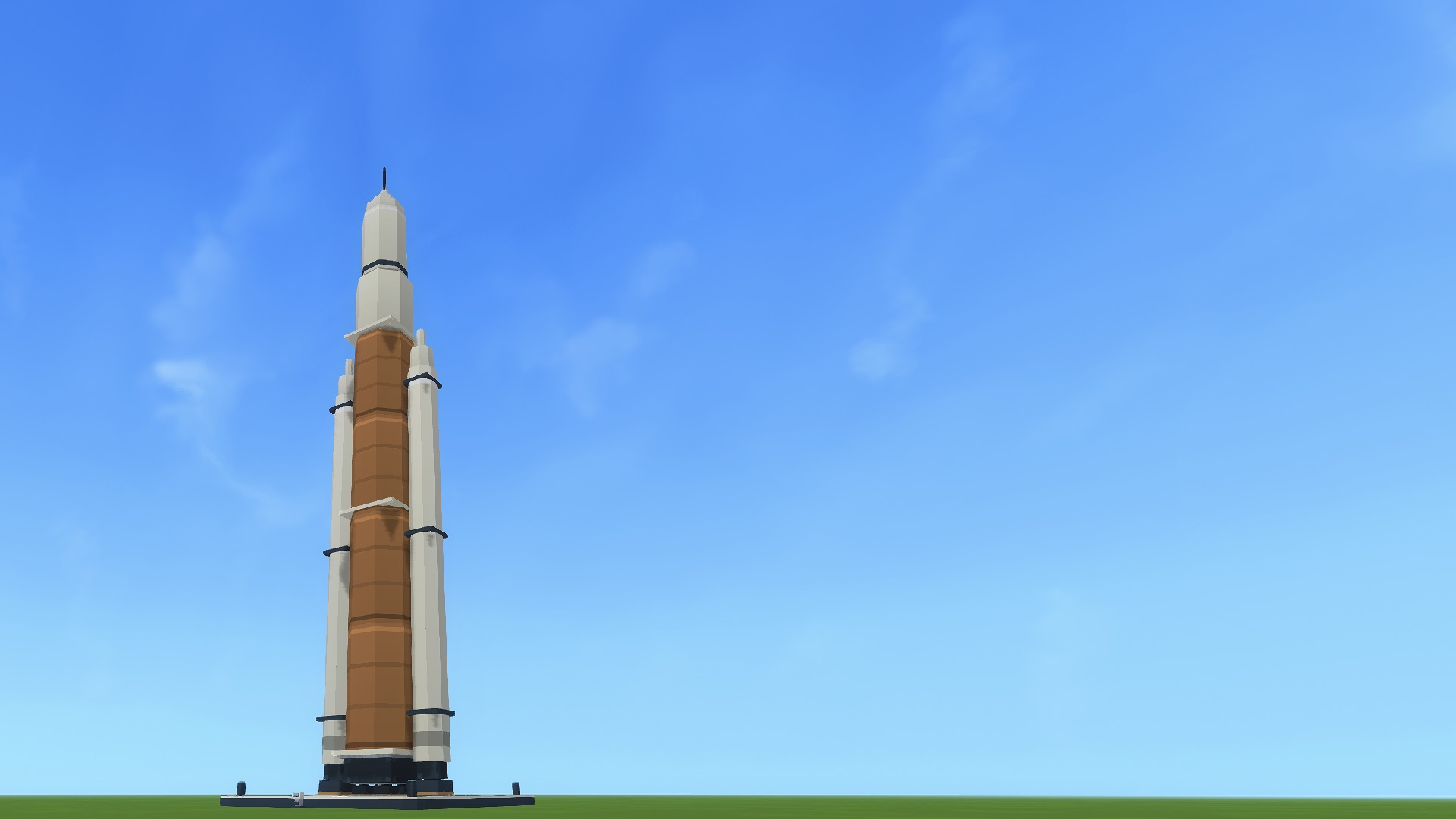
A copper-orange core, two ivory strap-on boosters, crew capsule and escape tower give Odyssey its heavy-launcher silhouette. Its initial parts and fuel come from the home-world chain. It reaches the current paid Lune route without destination minerals.
Kestrel Stack
Kestrel combines a silver booster with a dark-tiled orbital ship, broad flaps, upper fins and multiple engine bells. Its widest point is 19.31 blocks, including those upper fins. The pad leaves at least 2.84 blocks of service width on either side.
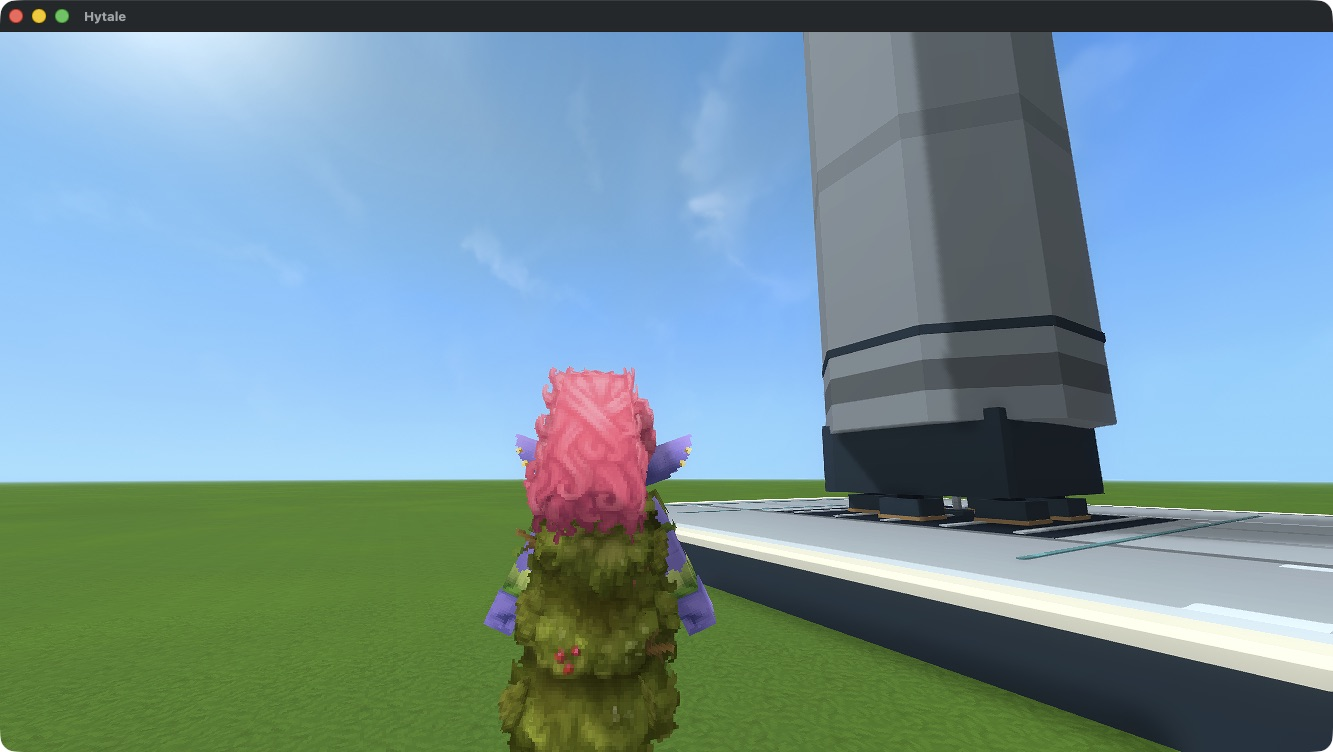
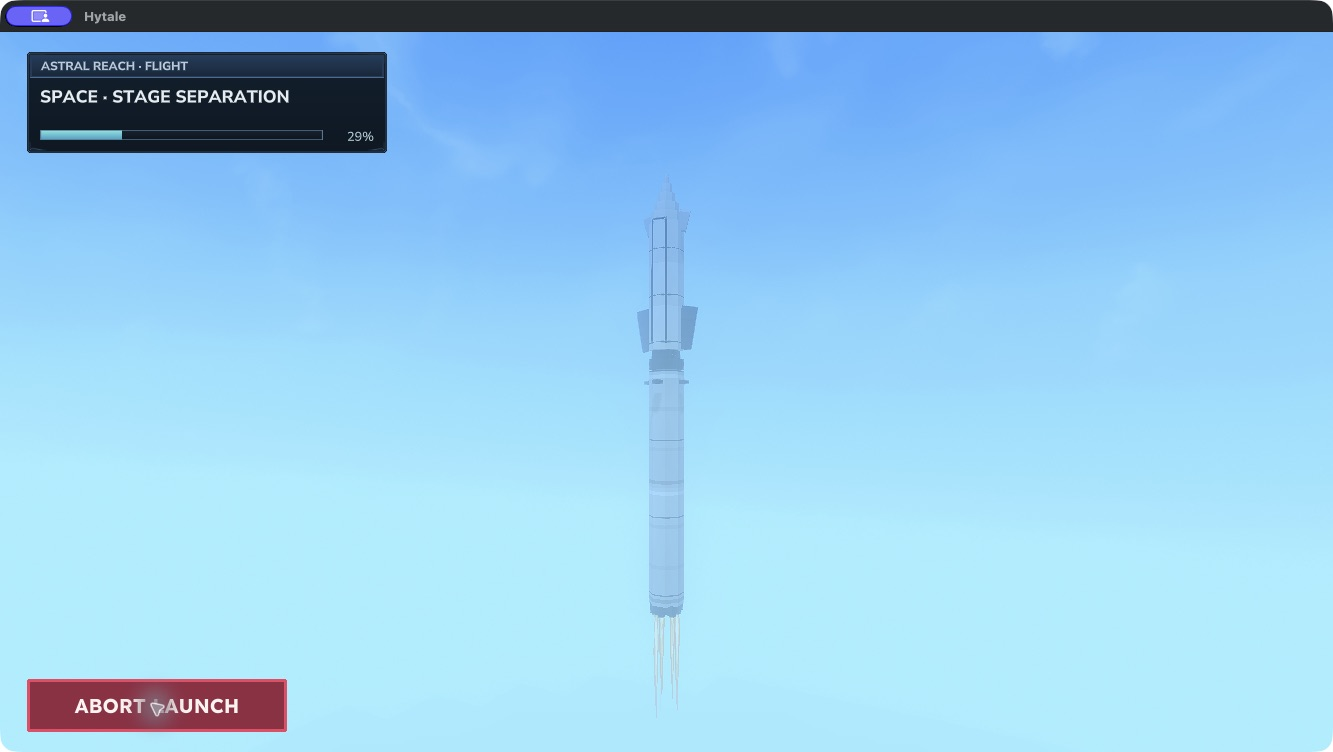
The current flight gives Kestrel a separate booster and upper ship. Its locally tested sequence shows separation in space, the booster’s flip and home-pad landing, then the orbital ship in space before navigation opens. The latest 90-second flight adds a longer ballistic fall and braking approach. Human visual and comfort acceptance remain pending.
Current flight limits
Both supported plans currently serve Lune. The spacecraft use decorative full-size exteriors and a compact control anchor; there is no walkable cabin or aerodynamic freeflight. Automatic passenger boarding and upper-stage landing are being tested in the current implementation. The new third-person ascent and orbital-navigation candidate is described on development status.
The model workshop also contains the independent Kestrel upper ship, Peregrine explorer, Wren lander and additional infrastructure. Their presence in the art catalogue does not make them selectable playable vehicles. Peregrine is wider than the supported 25-block pad.
Select a destination in orbit
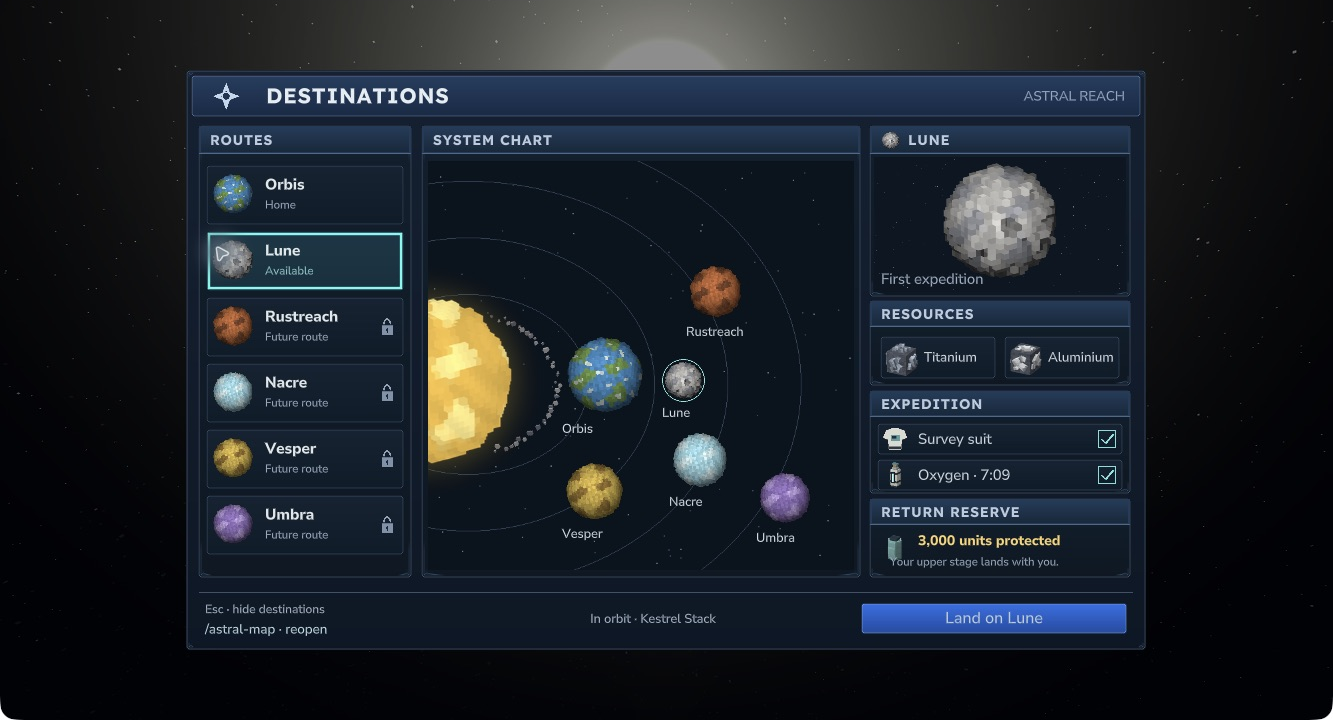
The redesigned Destinations screen becomes available after reaching space. Select a route in the list or click a planet on the top-down system chart. Its details show resources, equipment, available oxygen and protected homeward fuel. Use the single travel button to land on Lune or return to Orbis. Later bodies remain Future route entries with travel disabled.
The interface uses a simple clickable top-down system chart. Select a planet directly or use the route list. There are no drag, pan, zoom or separate 3D controls.
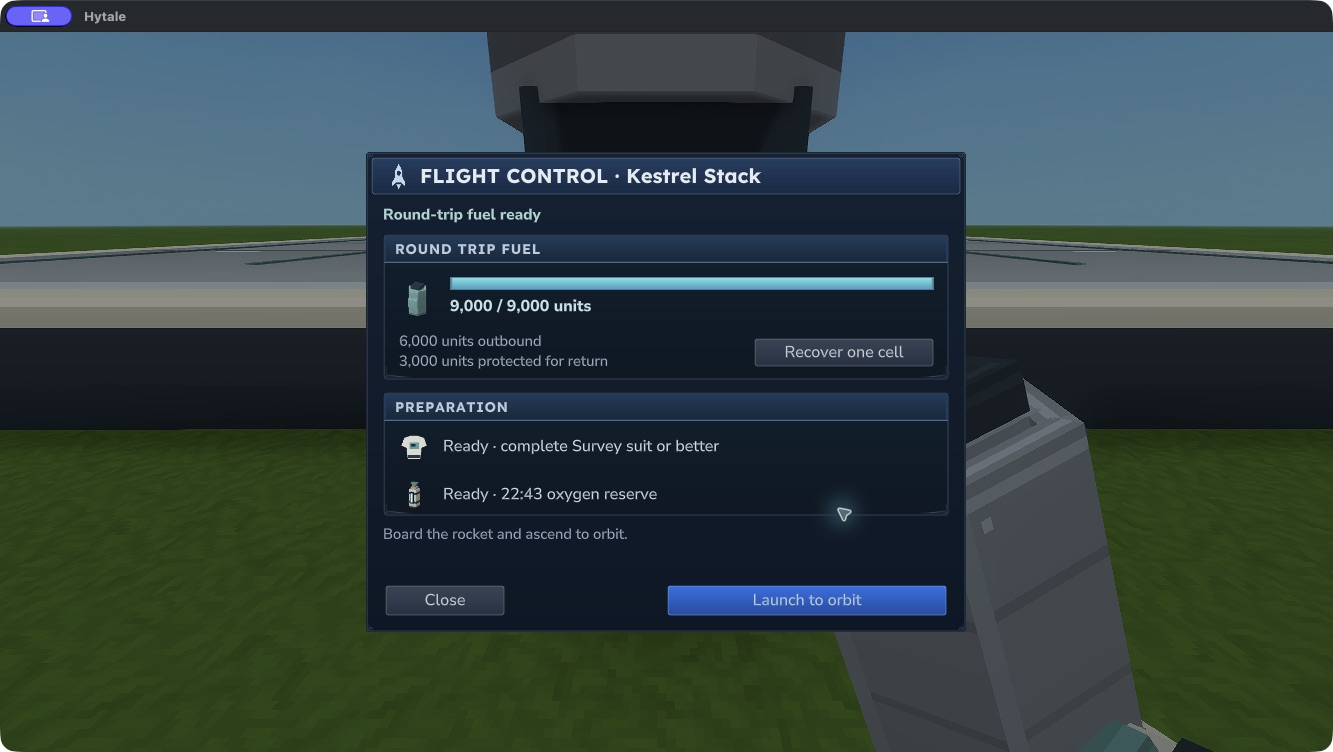
During a cancellable launch, the large red ABORT LAUNCH button stops the active departure and restores its reserved fuel. A local Hytale 0.7.4 test cancelled a real paid launch and returned all 9,000 units to the rocket. The full tank persisted after a normal quit and reload.
Press Esc to hide Destinations and remain in orbit. The footer explains how to reopen it: type /astral-map. A reminder appears when the map is hidden. Hiding or reopening navigation does not spend the return reserve.
The revised interface has representative native selection, clean item icons, construction, paid travel and cancellation checks on Hytale 0.7.4. Human appearance, comfort, listening and multiplayer acceptance remain open. The gallery includes current native workshop and lunar photographs.